
Downsizing isn't about settling for less — it's about choosing a home that fits the life you're living now. Across Mid-Michigan, more homeowners are making the intentional decision to right-size: trading oversized properties for homes that better match their current needs, free up equity, reduce maintenance demands, and simplify daily life. Whether you're an empty nester watching the kids move out, a retiree ready to trade yard work for freedom, or someone who simply wants less house and more living, this guide walks you through every step of the downsizing process.
After more than 20 years of helping buyers and sellers across Genesee County, Oakland County, Livingston County, and surrounding communities, I've guided hundreds of clients through this transition. The decisions are deeply personal, but the process doesn't have to be overwhelming — especially when you approach it with a clear plan. For selling preparation, see our step-by-step selling guide, and for community selection read our guide to choosing the right Mid-Michigan community.
Why Downsizing Is Trending in Michigan
Michigan is seeing a significant shift in housing demand driven by demographic and lifestyle changes. Baby boomers — the largest generation of homeowners in the state — are entering retirement or have already retired, and many are recognizing that the 2,800-square-foot family home they purchased in the 1990s no longer serves their needs. At the same time, rising property taxes, increasing maintenance costs, and the physical burden of caring for a large property are pushing homeowners to reconsider what they truly need.
The numbers tell the story. Michigan's 65-and-older population is projected to grow significantly through 2030, and a large percentage of these residents own homes that are too large for their current household size. Nationally, the National Association of REALTORS® reports that downsizing is one of the top motivations for home sales among Baby Boomers — and Mid-Michigan is no exception.
But downsizing isn't limited to retirees. Younger homeowners are also embracing the trend. Dual-income couples without children, professionals seeking lower-cost living, and families who've realized they use only a fraction of their square footage are all making the move toward right-sized homes. The motivation varies, but the outcome is the same: a home that costs less to maintain, is easier to manage, and frees up both time and money for the things that matter most.
When to Consider Downsizing
There's no single right time to downsize, but there are clear signals that it may be worth considering. Here are the most common triggers I see among my clients:
- Empty nesting. When children have moved out permanently, bedrooms go unused and the square footage that once made sense now feels like a burden. An extra 800–1,200 square feet of empty space still costs money to heat, cool, insure, and maintain.
- Retirement. A fixed income changes the math. Lower monthly housing costs — including mortgage, property taxes, utilities, insurance, and maintenance — can meaningfully improve quality of life in retirement.
- Physical demands. Multi-story homes, steep staircases, large yards, and extensive exterior maintenance become increasingly difficult — and potentially hazardous — with age. A ranch-style home or a condo with an elevator eliminates these daily challenges.
- Financial goals. If you've built significant equity in your current home, downsizing can unlock that capital — funding retirement accounts, travel, debt payoff, or an emergency fund — while simultaneously reducing your monthly expenses.
- Lifestyle change. Divorce, widowhood, a new job, or a desire to be closer to family or amenities can all prompt a reevaluation of where and how you live.
How to Evaluate What You Need vs. What You Have
The most important step in the downsizing process happens before you ever look at a listing: an honest assessment of how you actually use your current home. Most people are surprised by what they discover.
Start with a room-by-room walkthrough. For each room, ask yourself: How often is this space used? Could its function be combined with another room? Is the furniture in this room worth moving, or would it be better suited to a different space? Are there rooms that have become catch-all storage areas for items you haven't touched in years?
Then consider your daily patterns. Where do you spend most of your time? For many homeowners, the answer is the kitchen, a living area, the primary bedroom, and perhaps one other room. The formal dining room that seats twelve — used twice a year — the upstairs bonus room, and the basement workshop are all candidates for honest evaluation.
A useful rule of thumb: if you're moving from a 3,000-square-foot home, a well-designed 1,600–2,000-square-foot home will typically accommodate everything you use daily with room to spare. Modern floor plans — especially ranch-style homes and well-designed condos — are far more efficient than the compartmentalized layouts common in older, larger homes.
The Emotional Side of Letting Go
Let's be direct: downsizing is as much an emotional process as it is a practical one. Your home holds decades of memories — holidays, milestones, children's growth marks on the doorframe. Letting go of that physical space can feel like letting go of the past.
That feeling is completely normal, and it's important to acknowledge it rather than rush past it. Here are some strategies that help my clients navigate the emotional dimension:
- Start early. Begin the sorting and decluttering process months before you list. This removes the pressure of making emotional decisions on a timeline.
- Photograph and document. Take photos of rooms, gardens, and meaningful spaces. Create a digital album that preserves the memories without requiring you to keep every physical object.
- Pass items to family intentionally. Offer meaningful pieces to children, grandchildren, or other family members. Giving items a new home with people you love is far more satisfying than leaving them in a storage unit.
- Focus on what you're gaining. Shift the narrative. You're not losing a home — you're gaining freedom, lower costs, less maintenance, and a space that fits your life as it is today.
- Consider professional support. Professional organizers, estate sale companies, and move managers specialize in exactly this process. In Mid-Michigan, several reputable organizations can help sort, pack, donate, and sell household items.
Step-by-Step: The Downsizing Process
Here's a practical timeline that works well for most downsizers:
Step 1: Assess and plan (3–6 months before listing). Walk through your home with fresh eyes. Create a "keep," "donate/sell," "gift," and "discard" system for every item. Measure your current furniture and compare it to the dimensions of typical smaller homes — this immediately reveals what will and won't fit.
Step 2: Declutter room by room. Start with the spaces you use least — guest rooms, basement storage, attic, garage. Work methodically through the house, one room at a time. Set aside items for donation (Goodwill, Salvation Army, and local shelters all accept household goods), schedule estate sales for valuable collections, and arrange for junk removal of items that can't be donated.
Step 3: Consult a real estate professional. A knowledgeable local agent can help you understand the current value of your home, advise on timing, and begin identifying suitable downsizing options in the areas you're considering. This is where working with someone who knows the Mid-Michigan market inside and out becomes invaluable — pricing strategy matters when you're coordinating a sale and purchase simultaneously.
Step 4: Prepare your current home for sale. With the clutter removed, your home will naturally show better. Consider minor updates that maximize appeal — fresh paint, updated light fixtures, clean carpets, and strong curb appeal. A well-prepared home sells faster and for more, which directly impacts your downsizing budget.
Step 5: Begin your search for the right smaller home. Define your priorities: single-level living? Low-maintenance exterior? Specific community? Proximity to family or amenities? Your agent can curate options that match your criteria and flag potential issues before you tour.
Step 6: Coordinate timing. Ideally, your current home sells and your new home closes within a similar timeframe. A bridge loan, a rent-back agreement, or strategic listing timing can help manage the transition. Discuss all options with your agent and lender early in the process.
Step 7: Move, settle, and enjoy. Hire a reputable moving company that specializes in downsizing moves. Many full-service movers will pack, unpack, and arrange furniture in your new home — a worthwhile investment when you're transitioning from a larger to a smaller space.
Staging and Preparing a Larger Home for Sale
Your larger home is likely your biggest asset in this process, so maximizing its sale price is critical. Here's what I recommend for downsizers preparing their current home for market:
Declutter aggressively before staging. A home with fewer furnishings and personal items will appear larger, brighter, and more inviting to buyers. After decades in a home, even well-maintained properties can feel crowded. Removing 30–50% of furniture and personal items is not uncommon — and it almost always improves showing quality.
Invest in high-return touch-ups. Fresh neutral paint throughout, clean or replaced carpet, updated hardware on kitchen cabinets, and professional deep cleaning can yield a strong return. Major renovations are typically not necessary or cost-effective for a quick sale.
Maximize curb appeal year-round. In Michigan, first impressions matter in every season. Ensure the lawn is manicured, the entry is welcoming, exterior paint or siding is clean, and outdoor lighting works. For fall and winter listings, seasonal touches like mums, evergreen planters, or tasteful holiday decorations create warmth.
Address deferred maintenance. Buyers — and their inspectors — will notice the leaky faucet, the cracked driveway, and the aging roof. Proactively addressing visible maintenance issues prevents negotiation concessions that can cost you thousands.
Finding the Right Smaller Home
Mid-Michigan offers a range of right-sized housing options across every price point and lifestyle preference:
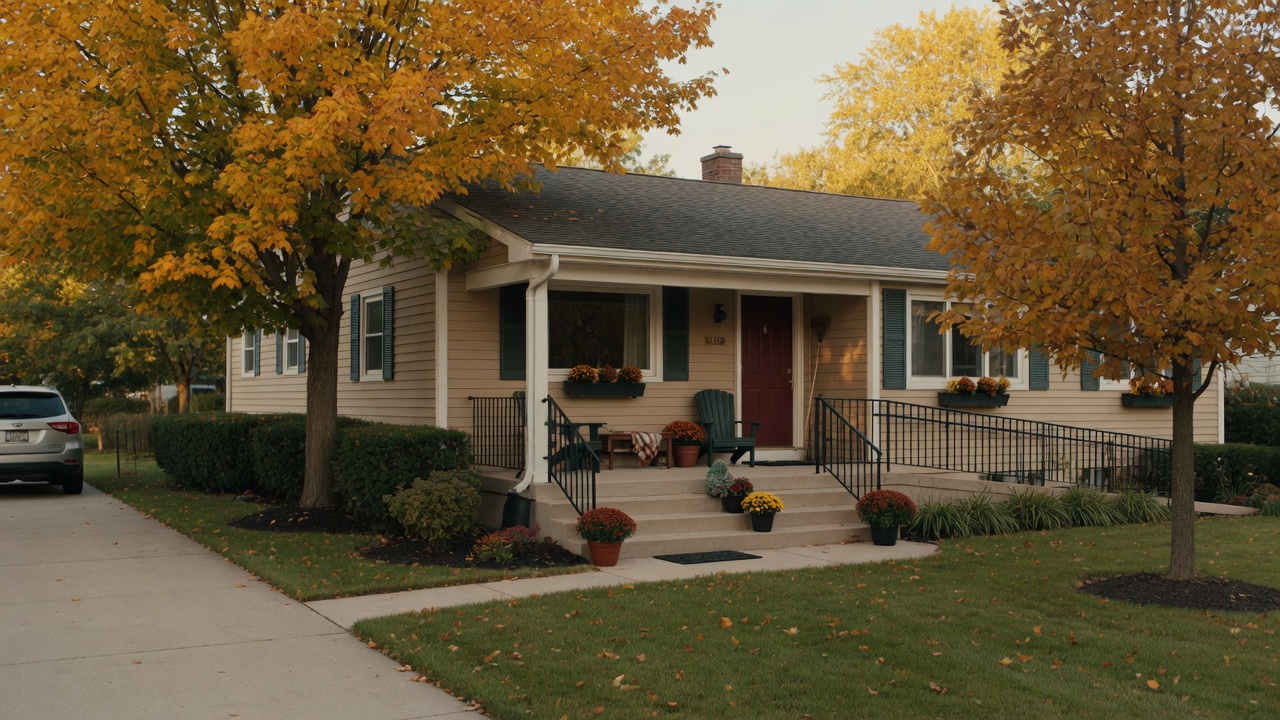
- Ranch-style homes. Single-level living eliminates stairs while providing the privacy and independence of a detached home. Ranch-style construction is abundant throughout Mid-Michigan, particularly in Grand Blanc, Fenton, Davison, and Holly — communities with established neighborhoods and convenient access to amenities.
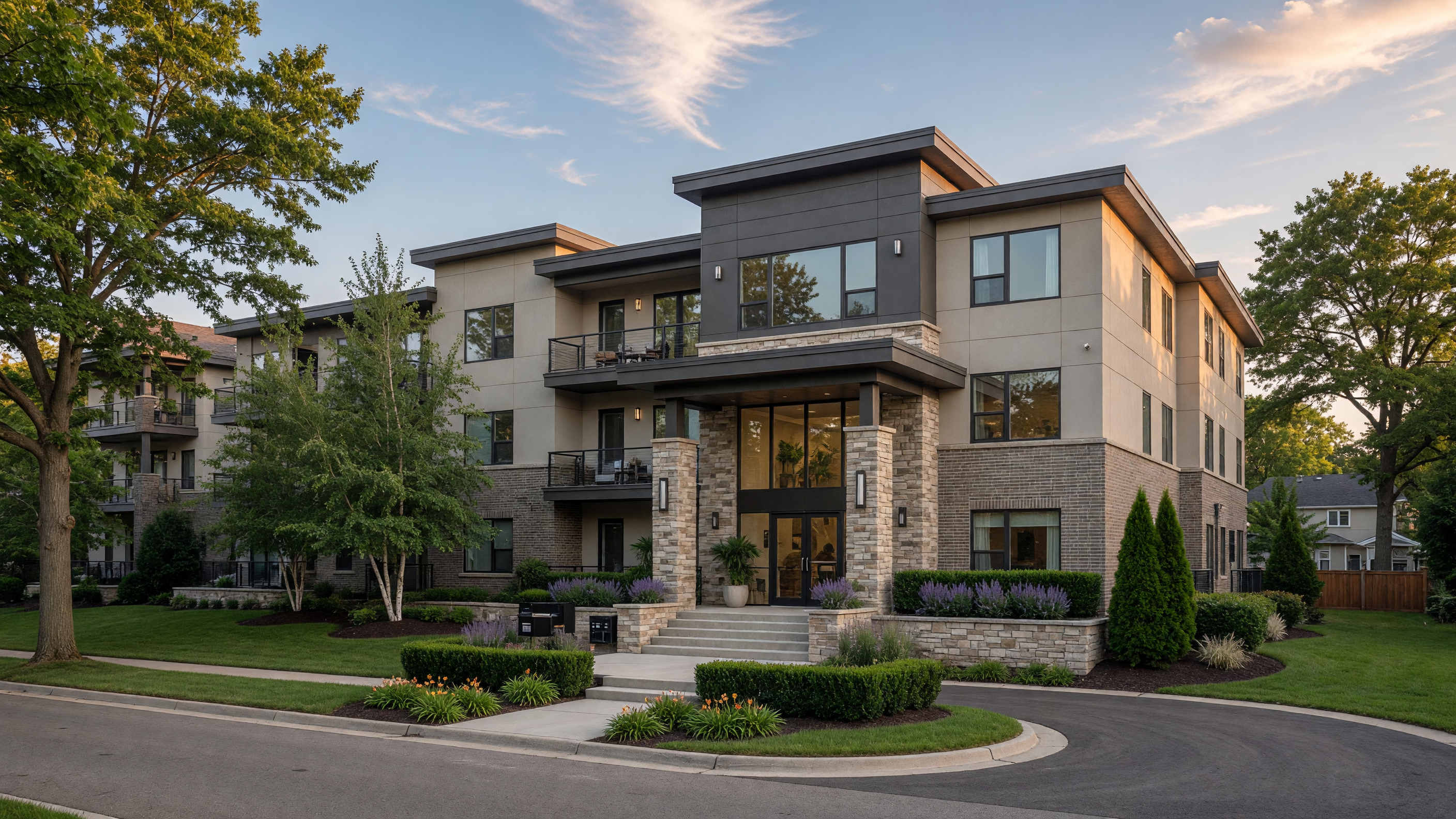
- Condominiums. For maximum low-maintenance living, condos handle exterior maintenance, landscaping, and snow removal through the HOA. Popular condo communities exist throughout Genesee County, Oakland County, and Livingston County, with price points ranging from approximately $100,000 to $350,000 depending on location and amenities. Review our complete condo buying guide for HOA due diligence essentials.
- Townhomes. Townhome communities offer a middle ground between condos and single-family homes — often with attached garages, private entry, and some exterior maintenance included in the HOA. Many newer townhome developments in Oakland and Livingston counties are designed specifically for empty-nesters and active adults.
- Maintenance-free communities. Some planned communities in Mid-Michigan bundle all exterior maintenance — lawn care, snow removal, landscaping, exterior repairs — into a single monthly fee. These communities are purpose-built for downsizers and retirees who want the independence of a single-family home without the upkeep.
Financial Benefits of Downsizing
The financial case for downsizing is compelling, and it extends well beyond the sale price difference between your current home and your next one:
- Equity release. If you've owned your home for 15–30 years, you've likely built substantial equity — potentially $100,000 to $300,000 or more. Downsizing can convert that equity into liquid savings, retirement funds, or debt reduction.
- Lower property taxes. Michigan property taxes are assessed based on taxable value. A smaller home in a lower-tax community can save you thousands annually. (More on Michigan-specific considerations below.)
- Reduced utility costs. Heating, cooling, and lighting a smaller space costs significantly less — a meaningful savings during Michigan's long winters and warm summers.
- Lower maintenance costs. Roof replacement, HVAC service, lawn care, snow removal, and general upkeep all scale with home size. Downsizers routinely report 40–60% reductions in annual maintenance spending.
- Lower insurance premiums. A smaller home with updated systems typically costs less to insure, and condo or townhome ownership may further reduce your coverage requirements.
Michigan-Specific Considerations
Downsizing in Michigan comes with state-specific factors that directly impact your financial planning:
Property tax caps and the Proposal A millage system. Michigan's Proposal A limits annual increases in taxable value to the lesser of 5% or the rate of inflation — but only as long as you stay in the same home. When you sell and buy a new property, the taxable value resets to the State Equalized Value (SEV). This means your new home's property taxes may be higher than you'd expect based on the previous owner's tax bill. Always verify the projected tax burden before making an offer.
Senior exemptions and tax relief programs. Michigan offers several programs that can benefit older homeowners. The Homestead Property Tax Credit provides a refundable credit for qualifying homeowners and renters with incomes below certain thresholds. Homeowners age 65 and older may qualify for additional exemptions depending on their county and municipality. Check with your local municipality and the Michigan Department of Treasury for current eligibility requirements.
Winter maintenance burden. Michigan's winters are real, and they impose costs that many homeowners underestimate — roof snow removal, driveway plowing, sidewalk clearing, pipe insulation, heating system maintenance, and the physical risk of ice and snow. Moving to a condo or maintenance-free community eliminates most or all of these responsibilities. For downsizers with mobility or health concerns, this alone can be a deciding factor.
Flood zones and insurance. Parts of Mid-Michigan — particularly along the Flint River, the Shiawassee River, and in low-lying areas of Genesee and Saginaw counties — are in FEMA-designated flood zones. Flood insurance is an additional cost that varies significantly by location. When evaluating a downsizing purchase, verify the flood zone status and associated insurance costs.
Working with a Real Estate Agent for Downsizing
Downsizing involves two simultaneous transactions — selling your current home and purchasing your next one — and that complexity makes working with an experienced agent especially valuable. Here's what a skilled agent brings to the process:
- Dual-transaction coordination. Timing a sale and purchase simultaneously requires careful sequencing. An experienced agent manages the timeline so you're not stuck between homes or carrying two mortgages unnecessarily.
- Market knowledge. Pricing your current home correctly and identifying the right replacement property requires deep local market knowledge — knowing which neighborhoods are appreciating, which condo communities are well-managed, and where the best value exists for right-sized living.
- Emotional support and perspective. An agent who understands the downsizing experience provides steadiness during an emotional process — helping you make rational decisions when memories and attachment are involved.
- Referral network. Good agents maintain relationships with movers, organizers, stagers, contractors, lenders, and attorneys who specialize in transitions. This network saves you time and connects you with vetted professionals.
Common Downsizing Mistakes to Avoid
After guiding hundreds of transitions, I've seen the same pitfalls trip up otherwise well-prepared sellers. Here are the most common mistakes and how to avoid them:
- Starting too late. Begin decluttering and planning at least 3–6 months before you want to list. Rushing through decades of accumulation leads to stress, poor decisions, and left-behind items that cost money to move or store.
- Over-improving before selling. A $40,000 kitchen remodel rarely pays for itself in a quick sale. Focus on clean, well-maintained, and move-in ready — not luxury upgrades that appeal to your taste but not the buyer's budget.
- Renting a storage unit as a substitute for decisions. If items go into long-term storage, you've merely moved the problem — not solved it. Be honest: if you haven't used it in two years and it won't fit in your new home, let it go.
- Ignoring the tax implications. Under Michigan's Proposal A system, your new home's taxable value will reset. Factor projected property taxes into your budget before committing to a purchase.
- Buying sight-unseen. Floor plans and photos can be misleading. A home that looks adequate online may feel cramped in person, or a layout that works on paper may not accommodate your furniture. Always tour in person before making an offer.
Local Resources for Downsizers in Mid-Michigan
Several local organizations and services can support you through the downsizing process:
- Estate sale services: Local estate sale companies can professionally organize, price, and conduct on-site sales to liquidate household items. Several operate throughout Genesee, Oakland, and Livingston counties.
- Donation centers: Goodwill Industries, Salvation Army, and Habitat for Humanity ReStore locations throughout Mid-Michigan accept furniture, household goods, and building materials. Many offer pickup services for large items.
- Senior services: The Region VII Area Agency on Aging (covering Genesee, Lapeer, and Shiawassee counties) provides information on senior housing options, property tax assistance programs, and transition resources. The Oakland County Senior Services Division offers similar support for Oakland County residents.
- Michigan Department of Treasury: The state's official resource for property tax information, including the Homestead Property Tax Credit, senior exemptions, and tax relief programs. Visit michigan.gov/treasury for current details.
Ready to Make Your Move?
Downsizing is one of the most rewarding transitions you can make — but it works best with the right plan and the right support. With more than 20 years of experience helping Mid-Michigan homeowners navigate every type of real estate transition, I bring the local market knowledge, negotiation skill, and personal attention that downsizing demands. Whether you're just beginning to think about it or you're ready to list, I'm here to help you make confident, informed decisions every step of the way.