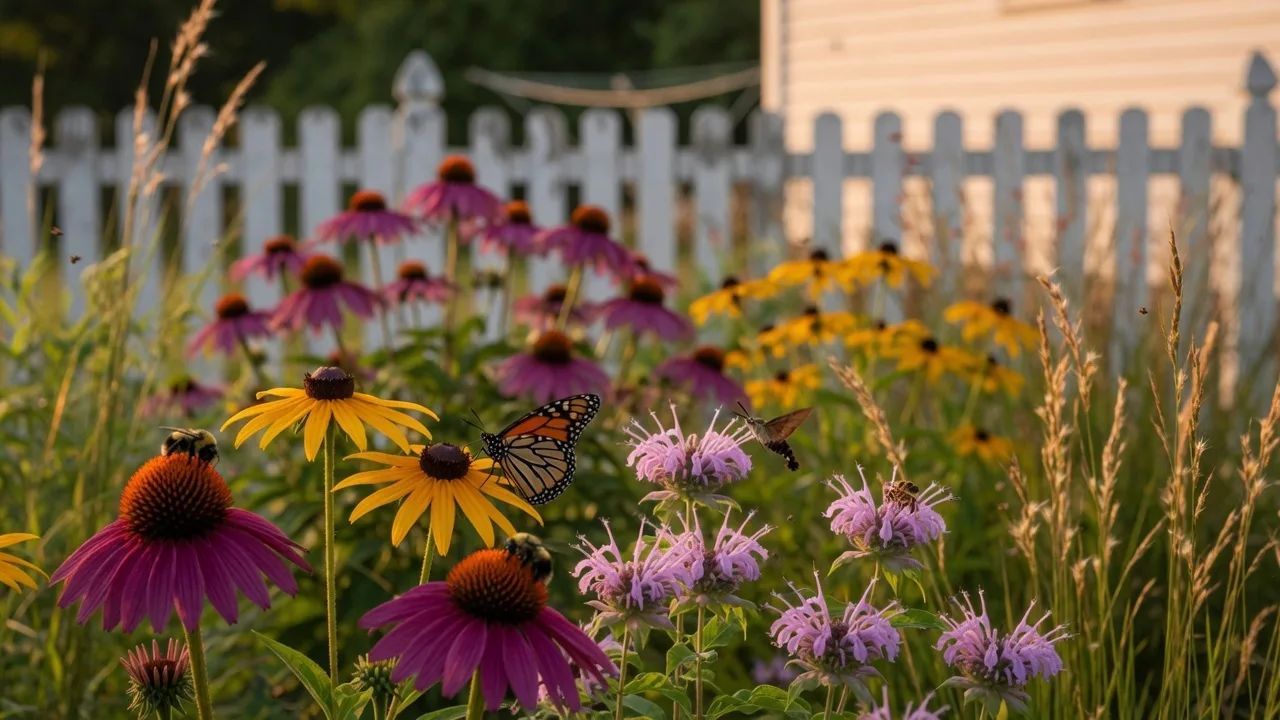

If you've spent any time in a Mid-Michigan backyard during July, you've seen them — monarchs drifting through the garden, bumblebees working the coneflowers, hummingbirds darting between cardinal flowers. A pollinator garden doesn't just look beautiful — it connects your yard to the larger ecological network that keeps Michigan's landscapes alive. And the best part? Once established, a native pollinator garden takes significantly less maintenance than a traditional lawn or formal flower bed.
Here's a practical guide to building a pollinator-friendly garden in Grand Blanc, Fenton, Clarkston, Brighton, and throughout the Mid-Michigan region — with real plant recommendations, sourcing tips, and design strategies that actually work in USDA zones 5b and 6a.
Why Native Plants Matter for Pollinators
Native plants have co-evolved with Michigan's pollinators over thousands of years. A native columbine provides nectar in the exact tube shape that local hummingbirds can reach. Milkweed is the only plant monarch butterflies will lay eggs on. When you plant non-native ornamentals — even pretty ones like crepe myrtle or imported daylilies — you're offering a visual show but little nutritional value for the insects that actually sustain the local food web.
According to Michigan State University Extension, gardening with native plants is one of the most effective individual actions homeowners can take to support pollinator health. The key is choosing species that are genuinely native to the Great Lakes region — not just "native to North America" broadly — so they're adapted to our specific soil, rainfall, and winter conditions.
The Best Native Perennials for Mid-Michigan Gardens
These perennials are proven performers in zones 5b and 6a across Genesee, Oakland, and Livingston counties. They return year after year, tolerate Michigan's freeze-thaw winters, and provide genuine food and habitat for local pollinators.
Top Picks for a Mid-Michigan Pollinator Garden
Add Native Grasses for Structure and Winter Interest
A pollinator garden isn't just flowers. Native grasses like little bluestem (Schizachyrium scoparium), switchgrass (Panicum virgatum), and prairie dropseed (Sporobolus heterolepis) add texture, movement, and winter structure. They also provide overwintering habitat for native insects — another reason to leave stems standing through winter rather than cutting everything back in fall.
Little bluestem is particularly well-suited to Mid-Michigan. It tolerates drought, poor soil, and full sun, and its coppery fall color is one of the best in any garden. It's a grass that quietly holds a pollinator bed together while everything else blooms around it.
Don't Forget the Shrubs
Native shrubs extend the pollinator season and add structure to the yard. Serviceberry (Amelanchier) blooms early spring and produces berries by June. Winterberry (Ilex verticillata) offers stunning red fruit through winter — and it's a native holly that thrives in Michigan's wet soils. Red osier dogwood (Cornus sericea) provides winter color with its bright red stems and supports birds year-round.
If you're working with a smaller yard, even two or three native shrubs along a fence line can transform a bland border into a four-season landscape feature that also feeds the local ecosystem.
Where to Buy Native Plants Near Mid-Michigan
Finding genuinely native plants — not just plants labeled "native" at a big-box store — takes a little effort, but several local sources make it straightforward:
Bordine Nursery has locations in Grand Blanc, Brighton, and Clarkston and carries a solid selection of Michigan-adapted native perennials and shrubs. Their staff can help you match plants to your specific site conditions — sun, shade, wet, dry.
For a wider native selection, the Wildflower Association of Michigan maintains a business directory of native plant nurseries throughout the state. Many of these growers specialize in locally sourced ecotypes — plants grown from seeds collected in Michigan, which means they're genetically suited to our exact conditions.
Local nurseries in the Flint and Genesee County area also carry seasonal native stock — it's worth calling ahead in spring to check inventory, as popular species like butterfly weed and blazing star tend to sell out quickly.
Design Tips for a Pollinator Garden That Looks Intentional
A common concern with native gardens is that they look "wild" or unkempt. The key is planting in drifts — groups of three, five, or seven of the same species — rather than scattering individual plants. This creates visual impact, makes it easier for pollinators to find what they need, and gives the garden a designed, purposeful look.
Aim for bloom sequence from April through October. Spring: wild columbine and Virginia bluebells. Summer: coneflowers, black-eyed Susans, bee balm, and milkweed. Fall: asters and goldenrod. This continuous bloom is what makes a pollinator garden genuinely functional — there's always something available for bees, butterflies, and hummingbirds.
Mulch with shredded hardwood rather than landscape fabric, and resist the urge to "clean up" too aggressively in fall. Leaving seed heads and hollow stems standing through winter provides critical overwintering sites for native bees — the same bees that will pollinate your garden the following spring.
A Subtle Boost for Your Home's Value
As a REALTOR® who works with buyers across these communities, I can tell you that thoughtful landscaping makes a real impression. A well-designed native garden signals that a homeowner cares about the property — and in today's market, curb appeal and outdoor living spaces are what buyers notice first. If you're considering selling your home, a pollinator garden is a distinctive feature that sets your property apart.
Whether you're planting your first perennial bed or converting a section of lawn into native habitat, the payoff is immediate — more color, more life, and less mowing. And if you're exploring where to live in Mid-Michigan and want a community with yards that support this kind of gardening, I'd love to help you find the right fit. Call Joyce at 810-513-3335 or reach out directly — I know these communities and the outdoor lifestyle that comes with them.