November is the month to set up backyard bird feeders across Mid-Michigan. Insects, berries, and wild seeds run short as the cold settles in, and birds lean hardest on feeders in mid-to-late winter, when energy demands peak and natural food is scarcest. Start now and the chickadees, cardinals, and nuthatches in your neighborhood will learn your feeder before the hardest weeks arrive. This guide covers the foods that attract the most Michigan winter birds, which species to expect, safe placement, cleaning, and local shops.
Why Feed Birds in Winter?
When do Michigan birds need feeders most? Late winter into early spring, when natural seed sources are depleted and cold-weather energy needs are highest, and again during extreme cold snaps. High-fat foods matter most in those deep-cold stretches. Setting up in November gives resident birds time to discover your feeder and build it into their daily route, so by the first snowstorm you have a steady stream of visitors instead of a feeder that sits empty.
The Four Foods That Do the Heavy Lifting
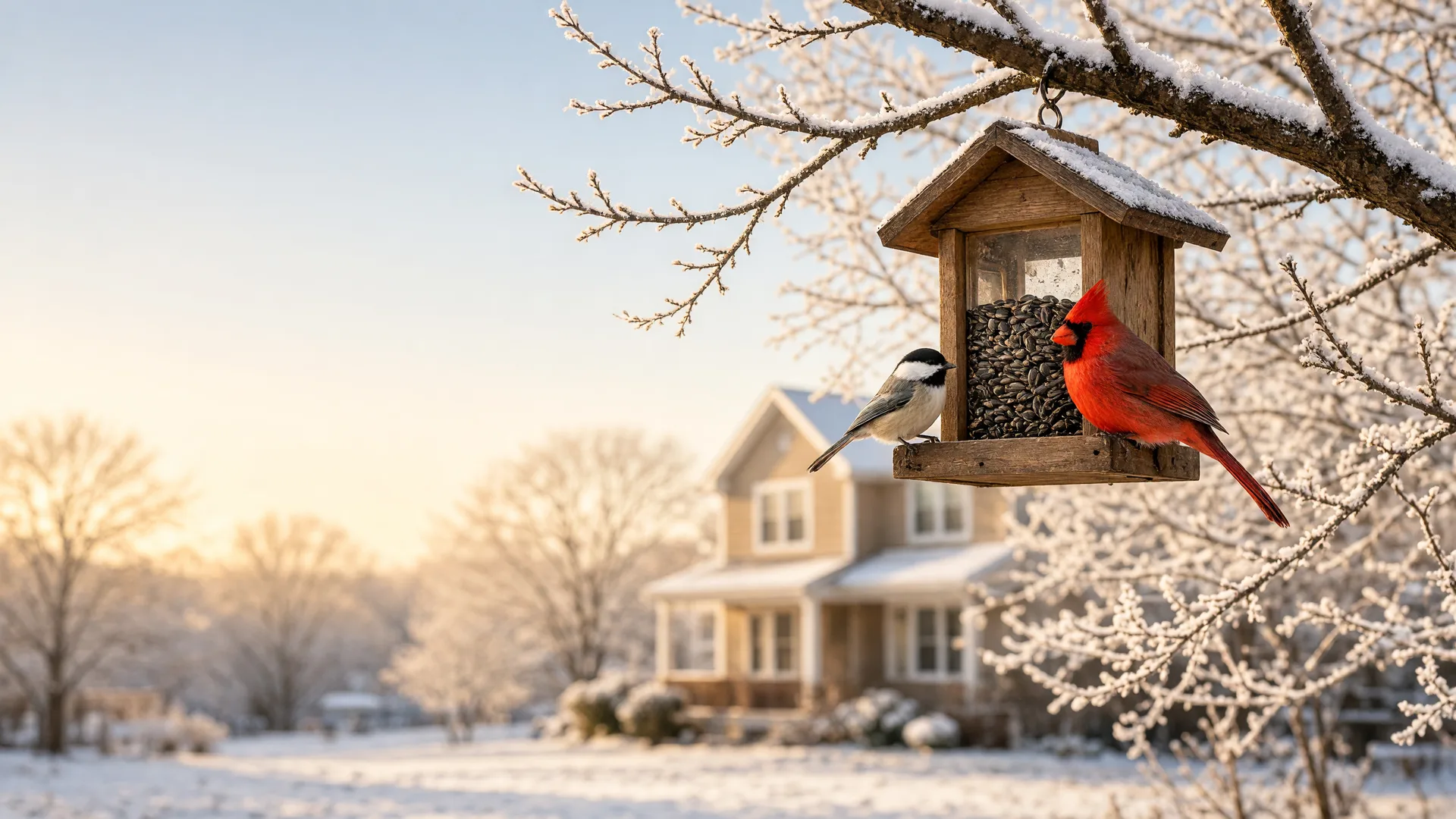
Black-oil sunflower seed is the single most important winter seed, with thin shells and high-fat kernels that black-capped chickadees, tufted titmice, northern cardinals, white-breasted nuthatches, finches, and blue jays all favor. Suet cakes, offered from roughly October through March, deliver the dense calories woodpeckers need; expect downy, hairy, and red-bellied woodpeckers along with nuthatches and chickadees. Nyjer seed is a tiny thistle seed that finches are built to crack, so offer it in a tube or sock with small ports for goldfinches, house finches, and pine siskins. White millet appeals to ground-feeding dark-eyed juncos, sparrows, and mourning doves; scatter it on the ground or use a low platform feeder.
The Backyard Birds You'll Likely See
Hang a feeder in view of a kitchen window and you will quickly meet a cast of regulars: black-capped chickadee, downy woodpecker, white-breasted nuthatch, northern cardinal, blue jay, tufted titmouse, American goldfinch, and dark-eyed junco. Kids can keep a simple tally sheet and photograph visitors through the glass, turning the feeder into an ongoing nature lesson. For the less common visitors, the Cornell Lab of Ornithology publishes a free winter bird ID library online.
Placement, Windows, and Safety
Place feeders within a few feet of trees or shrubs so birds can dart to cover from hawks, and hang them where cats cannot ambush them. Window strikes are the biggest preventable risk, and snow increases reflections that make them worse. Keep feeders less than 3 feet from glass or more than 30 feet away, because 15 to 30 feet is the danger zone where striking birds hit at full speed. If a bird is stunned, set it in a dark, quiet box and contact a licensed wildlife rehabilitator.
Clean Feeders Every Week or Two
Feeders spread disease when neglected. Clean them every one to two weeks with a 9:1 water-to-bleach solution, scrub off built-up hulls, rinse thoroughly, and let them dry completely before refilling. Wear gloves, and take feeders down and disinfect them if you see sick birds. Michigan Audubon posts seasonal guidance at the start of each winter, so it is worth a quick check.
Where to Buy Seed and Feeders Near Flint and Grand Blanc
JJ Cardinal's Wild Bird & Nature Store at 12830 S. Saginaw St. in Grand Blanc is a dedicated local shop where staff can match seed and feeders to your yard, and Wild Birds Unlimited at 4208 Corunna Rd. in Flint specializes in seed, feeders, and bird baths. For budget-friendly bulk bags, Tractor Supply in Davison (8171 Lapeer Rd.), Flushing (5460 W. Pierson Rd.), and Fenton (3265 Owen Rd.) carries black-oil sunflower and suet, and Meijer on W. Hill Rd. in Flint stocks a seasonal bird section. The Rookery gift shop at Seven Ponds Nature Center, 3854 Crawford Rd. in Dryden, sells feeders and bird houses and pairs well with a trail walk; call ahead on seed stock, and check hours online since several shops trim winter hours.
A Simple Ritual That Connects Kids to Home
Winter bird feeding is one of the least expensive, most dependable family activities in Mid-Michigan, and it works in any yard with a window and a place to hang a feeder. For families who want to take birding beyond the backyard, our guide to wildlife watching and birding in Mid-Michigan covers public spots like Seven Ponds, For-Mar, and the Shiawassee National Wildlife Refuge. Mature trees and shrub cover make birding rewarding in many Mid-Michigan yards, and when the buying and selling side of that conversation comes up, the guides at joyceenglandrealtor.com cover it in detail.

Joyce England, REALTOR®
Keller Williams First · Mid-Michigan
Joyce England is a Mid-Michigan REALTOR serving homeowners across Genesee, Oakland, Livingston, Lapeer, Shiawassee, Saginaw, and Tuscola counties. She writes about local living, seasons, and home care to help families make the most of the region year-round.