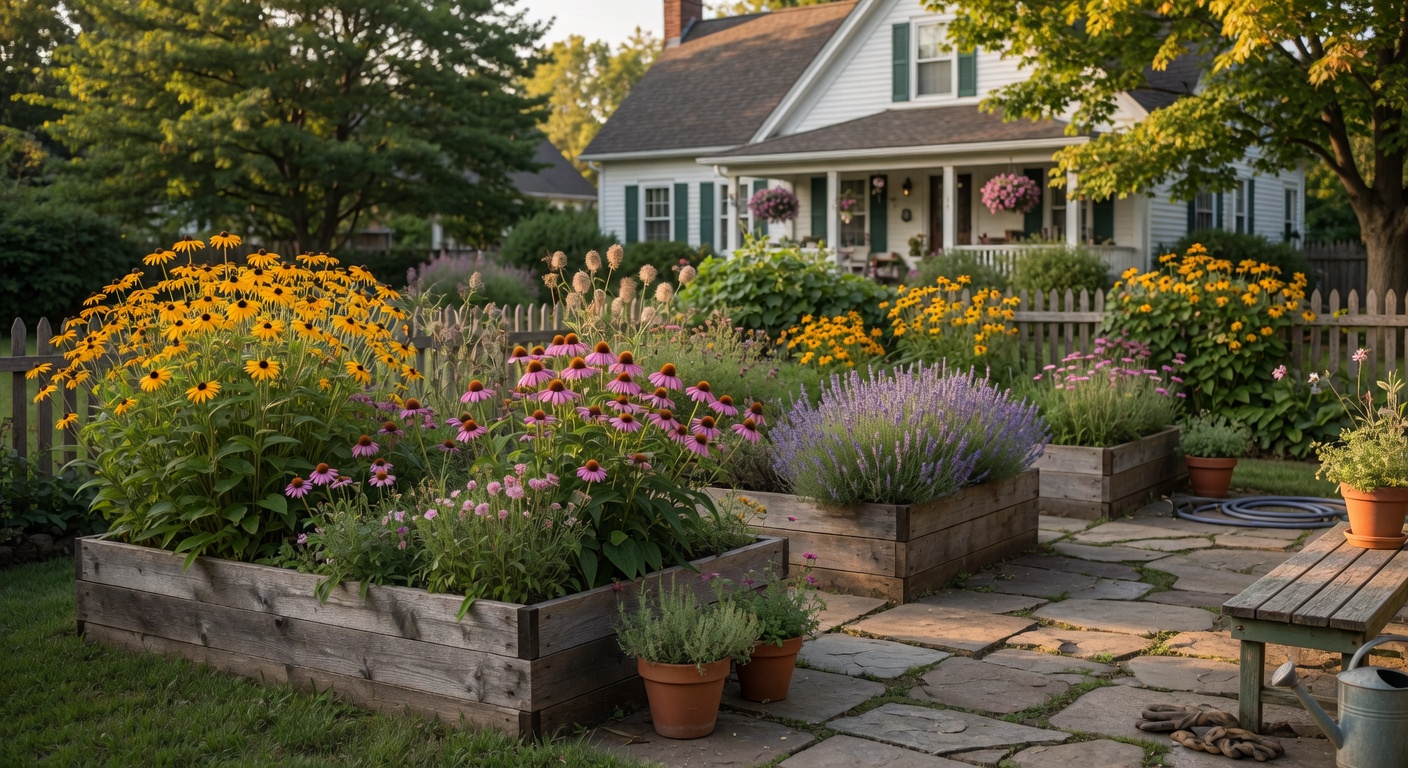
Low-maintenance landscaping doesn't mean giving up on beauty — it means designing with Michigan's climate, soil, and seasons in mind. When you choose plants that are adapted to the region's USDA hardiness zones (5b to 6a across most of Mid-Michigan), work with the natural rainfall patterns, and build smart structural elements into your landscape, you get a yard that looks great through all four seasons with a fraction of the effort a conventional landscape demands. The following guide covers native plants, design strategies, and practical tips specific to Mid-Michigan homeowners.
Why Native Plants Are the Foundation
Native Michigan plants evolved to thrive in the state's specific conditions — clay-heavy soils, cold winters, humid summers, and the freeze-thaw cycles that stress non-native species. Once established (typically after one growing season), native plants require:
- Less watering — Deep root systems access ground moisture. Most native perennials need supplemental water only during the first year or during extreme drought.
- No chemical fertilizers — Native plants are adapted to Michigan's natural soil fertility. Most need no fertilizer beyond an annual layer of compost or leaf mulch.
- Fewer pest problems — Native plants have co-evolved with local insects and diseases, resulting in naturally balanced ecosystems that rarely need pesticide intervention.
- Wildlife support — Native plants support local pollinators, birds, and beneficial insects. A milkweed patch can sustain an entire generation of monarch butterflies.
Recommended Native Plants for Mid-Michigan
These plants perform reliably across Genesee, Oakland, Livingston, and surrounding counties. Choose based on your sun exposure and design goals:
| Plant | Type | Light | Why It Works |
|---|---|---|---|
| Black-Eyed Susan | Perennial | Full sun | Drought-tolerant, attracts pollinators, blooms July–September |
| Prairie Smoke | Perennial | Full to part sun | Unique feathery seed heads, excellent ground cover, cold-hardy |
| Butterfly Milkweed | Perennial | Full sun | Monarch butterfly host plant, vibrant orange blooms, deep roots prevent erosion |
| Little Bluestem | Ornamental grass | Full to part sun | Blue-green summer foliage turns copper in fall, tolerates poor soil |
| Wild Columbine | Perennial | Part shade | Red and yellow tubular flowers attract hummingbirds, thrives in woodland edges |
| New England Aster | Perennial | Full to part sun | Purple fall blooms critical for migrating pollinators, grows 3–6 feet tall |
Design Strategies That Reduce Maintenance
Beyond plant selection, smart design choices dramatically cut the time and cost of yard maintenance:
- Reduce lawn — Traditional turf lawn is the highest-maintenance element in any landscape. Convert low-use lawn areas to native plant beds, ground covers like creeping thyme, or decorative gravel paths. Even a 25% reduction makes a noticeable difference in mowing and watering time.
- Layer plantings — Design beds with tall plants in back, medium in the middle, and ground cover in front. Dense, layered plantings shade out weeds naturally and reduce the need for mulch and hand weeding.
- Use hardscape strategically — Stone patios, gravel paths, and retaining walls define spaces without requiring any ongoing care. A well-designed hardscape backbone reduces the total planted area while adding structure and value.
- Install drip irrigation — A simple drip system for vegetable and flower beds delivers water directly to roots with minimal waste. It runs on a timer and requires no weekly attention once installed.
- Choose slow-growing shrubs — Select shrub varieties that reach their mature size naturally without regular pruning. Ninebark, viburnum, and serviceberry are excellent Michigan-native options that maintain their shape with minimal intervention.
Mulch: The Single Best Maintenance Investment
A 2–3 inch layer of hardwood or shredded bark mulch is the single most impactful thing you can do for a low-maintenance landscape:
- Suppresses weed germination by blocking light from reaching the soil surface
- Retains soil moisture, reducing watering needs by up to 50%
- Moderates soil temperature, protecting roots from extreme heat and cold
- Breaks down over time, improving soil structure and adding organic matter
- Creates clean, uniform bed edges that make the landscape look maintained with minimal effort
Apply mulch annually in spring. Keep mulch 3–4 inches away from house siding and tree trunks to prevent moisture problems. Cost: $30–$50 per cubic yard delivered, or $3–$5 per bag at garden centers.
Seasonal Maintenance Calendar
Even a low-maintenance landscape benefits from a light seasonal touch. Here's the minimal schedule:
- Spring — Cut back dead perennial stems, apply fresh mulch, divide overcrowded perennials, and start the irrigation system. Total time: one to two weekends.
- Summer — Minimal weekly attention: check irrigation, deadhead spent blooms if desired, and enjoy. Native plant beds need almost nothing once established.
- Fall — Leave perennial seed heads and stems standing for winter interest and wildlife habitat. Apply a light leaf mulch over beds. Clean up annual vegetable beds.
- Winter — Plan next year's additions. Order seeds and plants in January for spring planting. No landscape maintenance required.
Need Professional Guidance?
Let's Talk About Your Home
A well-landscaped home makes a strong impression — whether you're enjoying it yourself or preparing to sell. I can help you understand which improvements add the most value.