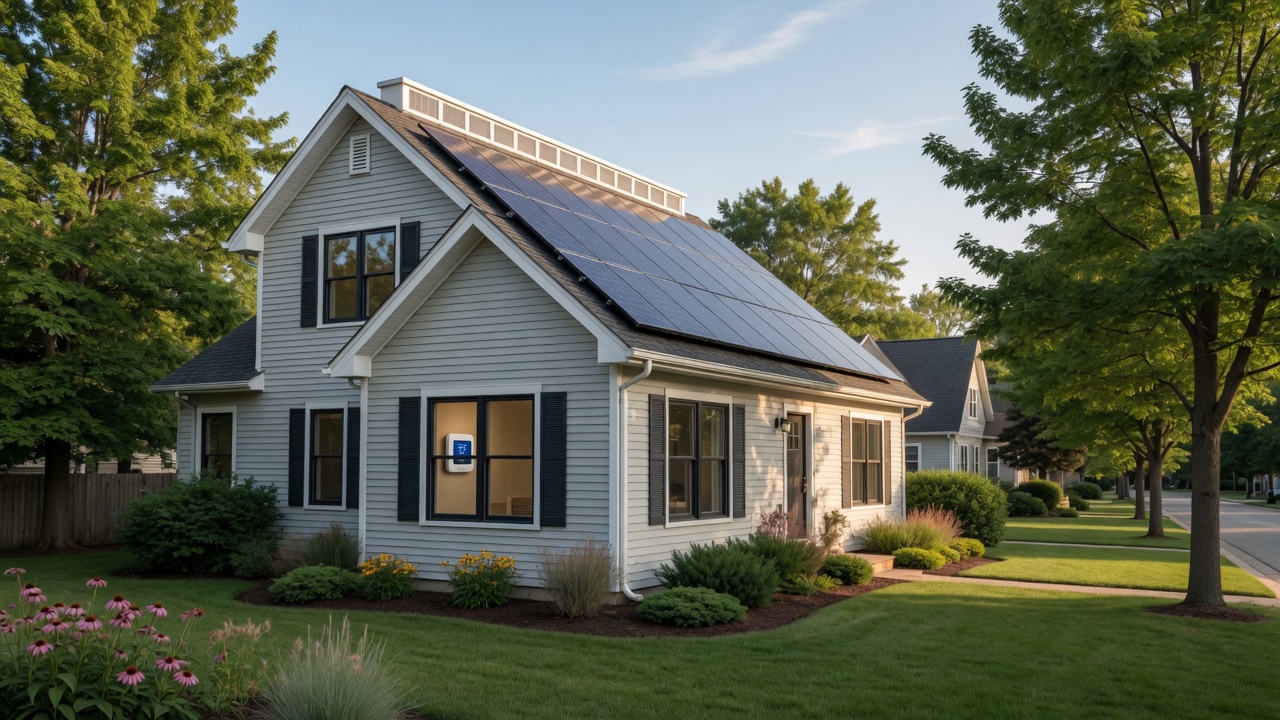
Michigan homeowners spend an average of $1,200–$1,800 per year on home energy costs, with heating alone accounting for roughly half of that during our long winters. The good news: most homes have significant opportunities for energy savings — often 20–30% — through a combination of low-cost improvements and strategic upgrades that pay for themselves over time. This guide walks you through the most impactful strategies for Mid-Michigan homes.
Home Energy Audit Checklist
A home energy audit identifies exactly where your home is losing energy and where your money is best spent. You can perform a basic DIY audit or hire a professional for a more comprehensive assessment:
DIY Energy Audit — What to Check
- Air leaks: On a windy day, hold a lit incense stick near windows, doors, electrical outlets, baseboards, attic hatches, and where different building materials meet. Moving smoke indicates a leak that needs sealing.
- Attic insulation depth: Measure the depth of your attic insulation. Michigan recommends R-49 (about 16–18 inches of fiberglass batt or 14–16 inches of blown cellulose). If you can see the ceiling joists, you need more insulation.
- Ductwork inspection: Check exposed ductwork in the basement or attic for disconnected sections, visible holes, and missing insulation. Seal joints with mastic sealant or metal-backed tape.
- Lighting inventory: Count how many incandescent bulbs you're still using. Each one replaced with an LED saves about $80 over the bulb's lifetime.
Professional Energy Audit
A professional audit includes a blower door test (which depressurizes the home to measure total air leakage), infrared thermography (which visualizes heat loss through walls and ceilings), and a detailed report with prioritized recommendations. In Michigan, both DTE Energy and Consumers Energy offer subsidized home energy assessments — often for $25–$100, a fraction of the actual cost. Start with your utility company's website.
Insulation and Weatherization
These are the two most cost-effective energy improvements for Michigan homes:
- Attic insulation to R-49: The single highest-ROI energy upgrade. Adding blown-in cellulose or fiberglass insulation to reach R-49 typically costs $1,500–$3,000 and can reduce heating and cooling costs by 15–25%. Many Michigan homes built before 2000 have R-19 or less — well below current recommendations.
- Air sealing: Before adding insulation, seal all air leaks between the living space and attic — around light fixtures, plumbing stacks, electrical boxes, and the attic hatch. Air sealing is inexpensive ($200–$500 if hired out) and dramatically improves insulation performance.
- Wall insulation: For homes with uninsulated wall cavities (common in pre-1970s construction), dense-pack cellulose or injection foam can be added through small holes drilled from the exterior. Cost: $3,000–$8,000 depending on home size. Check for utility rebates.
- Rim joist and basement insulation: The rim joist (where the foundation meets the first floor framing) is a major air leakage point. Seal and insulate with rigid foam board and spray foam. Cost: $500–$1,500 when hired out.
HVAC Maintenance and Upgrades
Your heating and cooling system is the largest energy consumer in your home. Proper maintenance and strategic upgrades pay for themselves:
- Annual professional tune-up: $100–$200 for a furnace or AC tune-up improves efficiency by 5–15% and extends equipment life. Do furnaces in early fall, AC units in late spring.
- Filter replacement: Change filters monthly during heavy-use seasons. A dirty filter increases energy consumption by 5–15%.
- High-efficiency furnace upgrade: If your furnace is 15+ years old and operates at 80% AFUE, upgrading to a 96%+ AFUE condensing furnace can cut heating bills by $300–$600 per year. Cost: $4,000–$7,000 installed. Federal tax credits of up to $600 may apply.
- Heat pump consideration: Modern cold-climate air-source heat pumps can efficiently heat Michigan homes down to -15°F and provide air conditioning in summer. They're particularly cost-effective when paired with solar panels. Federal tax credits cover 30% of the cost, up to $2,000.
Smart Home Technology for Energy Savings
- Smart thermostat ($150–$250): Automatically adjusts temperature based on your schedule and occupancy. The EPA estimates smart thermostats save 8–15% on heating and cooling — about $100–$200 annually in Michigan. Many utilities offer $50–$100 rebates.
- Smart plugs and power strips: Eliminate "vampire" energy draw from electronics that consume power even when off. Smart strips automatically cut power to peripheral devices when the main device (like a TV) is turned off.
- LED lighting throughout: A full-home LED conversion typically costs $200–$400 and saves $100–$200 annually. LEDs also last 15–25 times longer than incandescents, reducing replacement hassle.
- Smart leak detectors: Place under sinks, near the water heater, and by the washing machine. Early detection of a leak can prevent thousands in water damage — and many insurers offer discounts for water leak monitoring devices.
Solar Panel Considerations for Michigan Homes
Michigan may not be the sunniest state, but solar is increasingly viable here thanks to falling panel costs, improved efficiency, and strong incentives:
- Michigan solar potential: Despite our cloudy winters, Michigan receives about 4.2 peak sun hours per day on average — enough for solar to be cost-effective, especially with net metering.
- Federal tax credit: The Residential Clean Energy Credit covers 30% of the cost of solar panel installation with no upper limit. A $20,000 system would qualify for a $6,000 federal tax credit.
- Michigan net metering: Utilities are required to credit you for excess energy your panels produce, effectively rolling your meter backward. This is a key factor in solar's financial viability.
- Payback period: In Michigan, the typical solar payback period is 8–12 years, after which your electricity is effectively free for the remaining 15–20 years of panel life. Panels also increase home resale value.
Water Conservation Strategies
Water efficiency reduces both your water bill and the energy used to heat water (which accounts for about 18% of home energy use):
- Low-flow fixtures: Modern WaterSense-labeled showerheads use 2.0 GPM or less (vs. 2.5+ for older models) with no perceptible difference in pressure. Faucet aerators cost under $10 each and reduce flow from 2.2 to 1.5 GPM.
- High-efficiency toilet: Toilets manufactured before 1994 use 3.5–7 gallons per flush. Modern WaterSense toilets use 1.28 GPF or less. Replacing pre-1994 toilets can save 13,000+ gallons per year.
- Tankless water heater: Heats water on demand rather than maintaining a 40–50 gallon tank at temperature 24/7. Saves 24–34% on water heating costs for homes using 41 gallons or less daily. Cost: $2,500–$5,000 installed.
- Rain barrels: Capture roof runoff for garden and lawn irrigation. A single 55-gallon rain barrel can save 1,300 gallons during Michigan's growing season. Many Michigan communities offer discounted rain barrels through watershed programs.
Michigan Utility Company Rebate Programs
Both of Michigan's major utilities offer significant rebates that can dramatically reduce the cost of energy improvements:
DTE Energy (Southeast Michigan, including parts of Oakland and Livingston Counties)
- Home energy consultation: $25 subsidized assessment
- Furnace tune-up rebates: $50–$100
- Smart thermostat rebates: $50–$100
- Insulation and air sealing rebates: up to $400
- Appliance recycling: $50 for old refrigerators/freezers
Consumers Energy (Mid-Michigan, including Genesee, Saginaw, and Shiawassee Counties)
- Home energy assessment: $25
- Smart thermostat rebates: $50–$100
- Furnace and boiler rebates: up to $500
- Insulation rebates: up to $600
- Appliance rebates for ENERGY STAR models: $25–$150
Program details and rebate amounts change periodically. Check your utility provider's website for current offerings before starting any project.
Need Professional Guidance?
Make Your Home More Efficient — and More Valuable
Energy-efficient homes sell faster and for more money. I can help you identify which improvements deliver the best ROI in your neighborhood — and connect you with qualified local contractors.