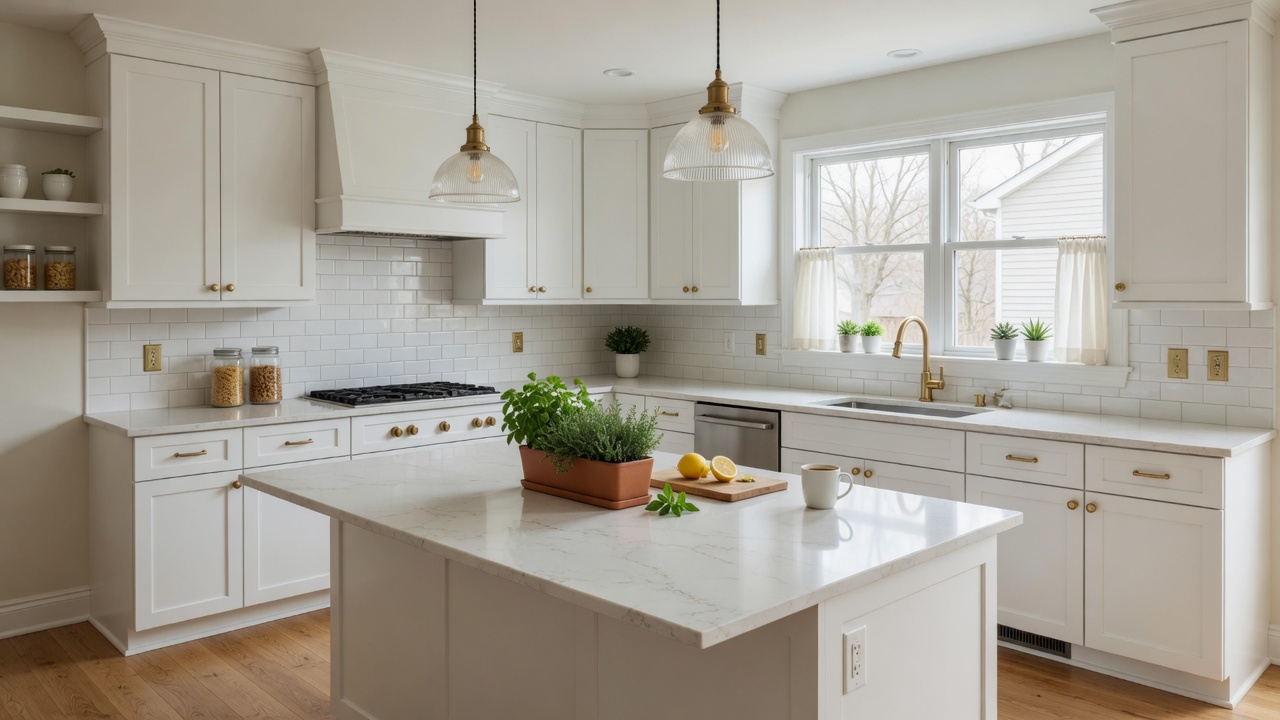
Home improvement projects can dramatically improve your quality of life while building equity — but only when they're planned thoughtfully, budgeted realistically, and executed well. This guide covers the most common Mid-Michigan renovation projects, from modest updates to major transformations, with practical advice for every budget level.
Kitchen Upgrades: Budget to Luxury
The kitchen is the heart of the home and consistently delivers the highest return on investment of any interior renovation.
Budget Refresh ($2,000–$8,000)
- Paint walls and cabinets (professionally sprayed cabinets look factory-finished)
- Replace cabinet hardware, faucet, and light fixtures
- Add a subway tile backsplash (DIY-friendly, high visual impact)
- Replace dated countertops with quartz or granite (the single highest-impact upgrade)
Mid-Range Renovation ($15,000–$35,000)
- New semi-custom cabinets with soft-close hardware
- Quartz or quartzite countertops with an undermount sink
- Stainless steel appliance package
- Under-cabinet lighting and pendant lights over an island
Luxury Transformation ($50,000+)
- Full custom cabinetry, professional-grade appliances, and layout reconfiguration
- Large island with seating, walk-in pantry, and dedicated beverage center
Bathroom Renovations
Bathrooms are the second highest-ROI interior renovation. Even one updated bathroom can significantly impact buyer perception:
- Budget refresh ($1,500–$5,000): New vanity, mirror, light fixture, toilet, fresh caulk and grout, and a modern shower head. Paint walls and ceiling.
- Mid-range renovation ($8,000–$18,000): New tile flooring, tiled shower/tub surround, new vanity with stone countertop, updated plumbing fixtures, and improved ventilation.
- Upstairs laundry addition: In two-story Mid-Michigan homes, adding a laundry room near bedrooms is a highly desirable upgrade that differentiates your home.
Outdoor Living Spaces
Michigan's warm months are precious, and outdoor living spaces extend your home's usable square footage during spring, summer, and fall:
- Deck addition or replacement ($5,000–$15,000): Composite decking (like Trex) costs more upfront but requires virtually no maintenance and lasts 25+ years, versus 10–15 years for pressure-treated wood. In Mid-Michigan's climate, composite's resistance to freeze-thaw cycles is a real advantage.
- Patio installation ($3,000–$10,000): Stamped concrete, paver stones, or bluestone. A well-designed patio with a fire pit or outdoor kitchen area is one of the most-used features in Michigan homes from May through October.
- Three-season room addition ($15,000–$40,000): A screened porch or three-season room with windows extends your living space into spring and fall. In Mid-Michigan, these are highly valued and differentiate a listing.
Energy-Efficient Windows and Doors
Replacement windows and doors are one of the few improvements that simultaneously improve comfort, reduce energy bills, and increase resale value:
- When to replace: Windows older than 20 years, single-pane windows, windows with failed seals (visible condensation between panes), or windows that are difficult to open/close or have visible rot around the frame.
- What to look for: Double or triple-pane, low-E coating, argon gas fill, and a U-factor of 0.27 or lower for Michigan's climate zone. Look for ENERGY STAR certification for the Northern zone.
- Cost: $400–$900 per window installed, depending on size and material (vinyl is most cost-effective; fiberglass and wood-clad are premium options).
- Entry door replacement: A new steel or fiberglass entry door with a modern design and good weatherstripping recovers approximately 65–90% of its cost at resale and instantly improves curb appeal.
Roofing, Siding, and Exterior Improvements
Your home's exterior envelope protects everything inside. These are not the most exciting projects, but they're among the most important:
- Roof replacement ($8,000–$18,000 for a typical Mid-Michigan home): Architectural asphalt shingles are the standard. Expect 25–30 years of life. If you're selling within 5 years, a new roof is a strong selling point. If your roof is nearing the end of its life, replacing it before listing removes a major buyer objection.
- Siding replacement ($10,000–$25,000): Fiber cement siding (like James Hardie) is the premium choice — fire-resistant, rot-resistant, and holds paint longer than wood. Vinyl siding is more budget-friendly but has a shorter lifespan. In Michigan, ensure proper housewrap and flashing are installed underneath.
- Garage door replacement ($1,500–$4,000): Consistently ranks as one of the highest-ROI exterior improvements. An insulated, modern-design garage door transforms curb appeal.
DIY vs. Professional Contractor: How to Decide
This decision shouldn't be based solely on cost. Consider skill level, time commitment, safety, and the cost of fixing mistakes:
| Good DIY Projects | Hire a Licensed Pro |
|---|---|
| Interior painting | Electrical work (panel, wiring, new circuits) |
| Tile backsplash installation | Plumbing beyond fixture replacement |
| Cabinet hardware and fixture swaps | HVAC installation or modification |
| Landscaping and mulching | Structural wall removal or addition |
| Deck staining and sealing | Roofing (safety and warranty concerns) |
| Weatherstripping and caulking | Window and exterior door installation |
Permits and Regulations in Michigan
Many homeowners underestimate the importance of permits. Failing to pull required permits can create serious problems when you sell — unpermitted work can be flagged during a buyer's inspection, potentially derailing a sale or requiring costly retroactive permits:
- When permits are typically required: Structural changes (wall removal/addition), electrical work beyond simple fixture replacement, plumbing beyond fixture swaps, HVAC installation, window and door enlargement, deck construction, fence installation (in many municipalities), and any addition to the home's footprint.
- Check with your local building department — Requirements vary by city and township. In Genesee County, each municipality has its own building department or contracts with the county. Always verify before starting work.
- Working with a licensed contractor: Reputable contractors will pull permits as part of their scope of work. If a contractor suggests skipping permits to save money, consider it a red flag.
Need Professional Guidance?
Planning Improvements? Let's Talk Strategy.
Before you invest in major renovations, understand which projects will deliver the best return in your specific neighborhood. I can help you prioritize improvements that add real value — and connect you with trusted local contractors.