
For Michigan homeowners, fall is not the end of the gardening season. It is the beginning of next year's lawn and landscape. The cooler temperatures, consistent rainfall, and warm soil of late August through October create ideal conditions for grass seed germination, root development, and perennial growth. What you do in your yard over the next six to eight weeks directly determines how green, thick, and weed-free your lawn will be next spring.
Whether you are preparing a home for sale, settling into a new property, or simply taking pride in your yard, here is a practical month-by-month guide to fall lawn and landscape care for Mid-Michigan homeowners.
Mid-August to Early September: Aeration and Overseeding
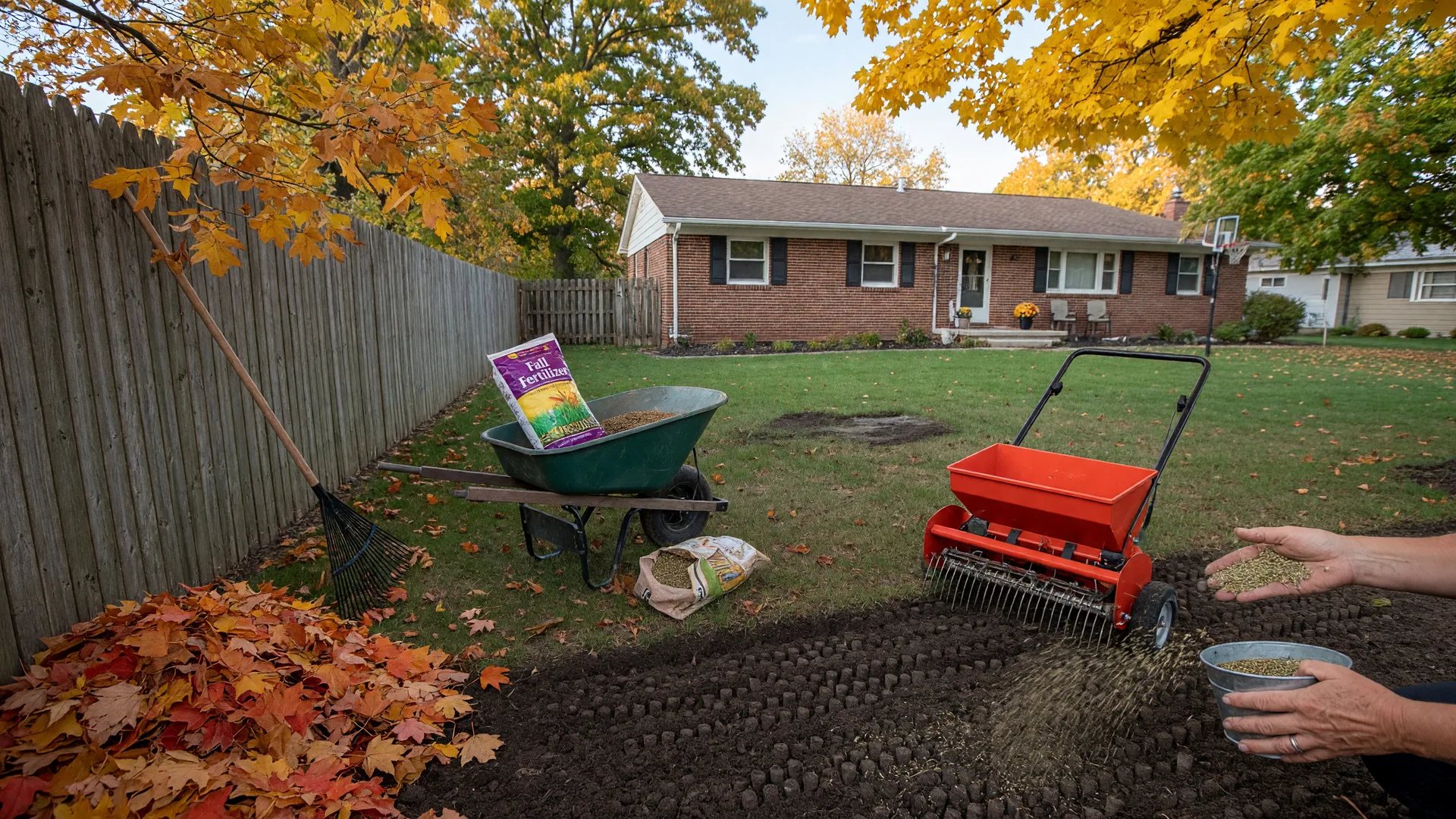
Aeration is the single most beneficial thing you can do for a Michigan lawn in the fall. Core aeration removes small plugs of soil from the lawn, relieving compaction and allowing air, water, and nutrients to reach the root zone. In Michigan's heavy clay soils — common throughout Genesee, Oakland, and Livingston counties — compaction is a persistent problem that limits root depth and makes lawns more susceptible to drought and disease.
After aerating, overseed with a cool-season grass blend suited to Michigan's climate. Kentucky bluegrass, perennial ryegrass, and fine fescue mixes perform best in our region. The ideal window for overseeding is mid-August through mid-September, when soil temperatures are still warm (55–65 degrees Fahrenheit) but the hot, stressful days of July are behind you. Water the newly seeded areas lightly every day until the seeds germinate, which typically takes 7 to 14 days. After that, reduce watering to two or three times per week.
Aeration machines are available for rent at most home improvement stores in the region, including Lowe's and Home Depot locations in Grand Blanc, Flint, and Fenton. Many local lawn care companies in Genesee and Oakland counties offer aeration and overseeding as a combined fall service, typically priced between $75 and $150 for a standard residential lot.
September: Fall Fertilization
A fall fertilizer application in September is critical for Michigan lawns. Cool-season grasses grow vigorously in the fall, and the nutrients you apply now go primarily to root development rather than leaf growth. A strong root system built in the fall gives your lawn a head start on spring green-up and makes it more resilient against summer drought the following year.
Use a fertilizer with a higher phosphorus and potassium ratio (the middle and last numbers on the fertilizer bag) and lower nitrogen. A formula around 24-0-12 or 32-0-10 works well for Michigan lawns. Apply it after your lawn has greened up from the overnight dew but before the leaves begin falling heavily. If you plan to aerate and overseed first, wait until the new grass has been mowed at least twice before applying fertilizer.
Pro tip for sellers: A well-maintained lawn is one of the most cost-effective curb appeal upgrades you can make when listing your home. Fall lawn care is visible to buyers showing up for October and November showings, and a healthy, green yard signals that the home has been cared for. If you are planning to sell this fall, consider having a professional aeration and overseeding done in early September so the lawn looks its best during showings.
October: Leaf Management and Perennial Care
Michigan's autumn leaf display is one of the best in the country, but a thick layer of leaves left on the lawn through the winter can smother the grass and invite snow mold. The most efficient approach is to mulch leaves with your mower rather than rake them. A mulching mower breaks leaves into fine pieces that decompose naturally and return nutrients to the soil. Studies have shown that mulched leaves do not contribute to thatch buildup and actually improve lawn health.
For heavy leaf coverage, you may need to mow more frequently in October. If the leaves are more than a few inches deep, rake or blow the excess into garden beds or compost piles. Avoid leaving large piles of wet leaves sitting on the lawn for more than a week.
October is also the time to cut back perennials and prepare garden beds for winter. Cut stems of ornamental grasses, coneflowers, black-eyed Susans, and other perennials to about 4 to 6 inches above the ground. Leave a few seed heads standing if you want to support winter bird activity. Add a 2- to 3-inch layer of mulch or compost around tender perennials to insulate the roots through Michigan's freeze-thaw cycles.
Late October to November: Spring Bulb Planting and Final Prep
The period from late September through early November is the ideal time to plant spring-blooming bulbs in Mid-Michigan. Tulips, daffodils, crocuses, hyacinths, and alliums all need a cold dormant period to bloom in spring. Plant bulbs when the soil temperature has dropped below 60 degrees Fahrenheit but before the ground freezes — typically late October in Genesee and Oakland counties.
Plant bulbs at a depth of about three times the bulb's height (roughly 6 to 8 inches for tulips and daffodils, 3 to 4 inches for crocuses). Space them 4 to 6 inches apart and water them in well after planting. A handful of bone meal or bulb-specific fertilizer in the planting hole helps establish strong roots before the ground freezes.
Other late-fall tasks include draining and storing garden hoses, shutting off outdoor spigots, cleaning and oiling garden tools, and applying a final light layer of compost to vegetable garden beds. If you have an irrigation system, have it blown out before the first hard freeze to prevent pipe damage.
The Bottom Line for Michigan Homeowners
Fall lawn and landscape care is an investment in your property's curb appeal, your enjoyment of your outdoor space, and the long-term health of your yard. A well-cared-for lawn and garden also add to a home's marketability when it comes time to sell. If you are considering selling your home in the next year or simply want to understand how your property compares to others in your Mid-Michigan community, call Joyce at 810-513-3335 — I would be happy to walk through the features that matter most to buyers in our local market.
Written by Joyce England, REALTOR® with Keller Williams First, serving home sellers and buyers throughout Genesee County, Oakland County, Livingston County, Lapeer County, Shiawassee County, Saginaw County, and surrounding Mid-Michigan communities.