There is a common misconception in Michigan that the gardening season ends when the kids go back to school. In reality, late August through October offers some of the best growing conditions of the year for cool-season crops. The summer heat has broken, the soil is still warm from months of sun, and the longer nights bring vital moisture. With a few simple season-extending techniques, you can keep harvesting fresh vegetables and greens from your Mid-Michigan garden well past the first frost.
Whether you tend a few raised beds in a Grand Blanc backyard or manage a larger vegetable garden on acreage in Lapeer County, these methods are affordable, low-tech, and remarkably effective. For more foundational seasonal garden advice, you might also enjoy our guide to late summer garden refresh in Michigan and our fall lawn and landscape preparation guide.
Understanding First Frost Dates in Mid-Michigan
Before you plan your fall garden, know your local frost dates. In Mid-Michigan, the average first frost ranges from late September in northern areas of Lapeer and Shiawassee counties to mid-October in communities near the lakes in western Livingston County and along the Saginaw Bay influence in Tuscola County. For the Grand Blanc and Flint area, the typical first light frost arrives around the first week of October.
These dates are averages, not absolutes. A light frost (temperatures between 29 and 32 degrees Fahrenheit) will kill tender crops like tomatoes, peppers, and basil but barely phase cold-hardy vegetables like kale, Brussels sprouts, and carrots. A hard freeze (below 28 degrees) is more serious and requires protection for all but the most cold-tolerant plants. Your local Michigan State University Extension office publishes updated frost date information online each year.
The Best Crops for Late-Season Growing in Michigan
Success with fall gardening starts with choosing the right plants. Some vegetables thrive in the cooling temperatures of September and October and even taste better after a light frost, which triggers the conversion of starches to sugars.
Cold-hardy greens are the superstars of the fall garden. Kale, Swiss chard, spinach, arugula, and mizuna all grow vigorously in cool weather and can be harvested well into November with minimal protection. Plant them by mid-August for a full fall harvest. Root vegetables including carrots, beets, turnips, radishes, and parsnips can be sown through late summer and left in the ground under a thick layer of straw mulch. They sweeten with frost and can be dug up as needed into December.
Brassicas such as broccoli, cabbage, Brussels sprouts, and cauliflower are naturally cold-tolerant and produce their best crops in the cool days of early fall. If you have transplants ready to go in the ground by early August, you can expect a generous harvest before winter sets in. Garlic is planted in October for the following summer's harvest, making it the perfect end-of-season crop that bridges one growing year to the next.
Row Covers: The Easiest First Step
Floating row covers are lightweight, permeable fabric that you lay directly over your garden beds. They allow sunlight and rain through while trapping heat and protecting plants from light frosts, insects, and wind. Row covers are sold at garden centers across Mid-Michigan, including English Gardens in Clarkston and Jenkins Garden Center in Fenton, or online through garden supply retailers.
To use row covers, simply drape the fabric over your plants and secure the edges with soil, stones, or landscape pins. In mid-fall when overnight temperatures dip into the 30s, row covers can add 4 to 8 degrees of frost protection. For extra protection on the coldest nights, double-layer the fabric. During the day, remove or prop up the covers on warm afternoons to prevent overheating. Row covers are reusable for several seasons if stored dry over winter, making them one of the most cost-effective season-extending tools available.
Cold Frames and Hoop Houses: Stepping Up Your Protection
A cold frame is essentially a bottomless box with a transparent glass or polycarbonate lid that sits over your garden bed. It traps solar heat during the day and protects plants from frost at night. Cold frames can extend your growing season by 6 to 8 weeks on either end. You can buy them ready-made or build your own from reclaimed windows, cedar boards, and hinges. Plans are widely available through Michigan State University Extension's online gardening resources.
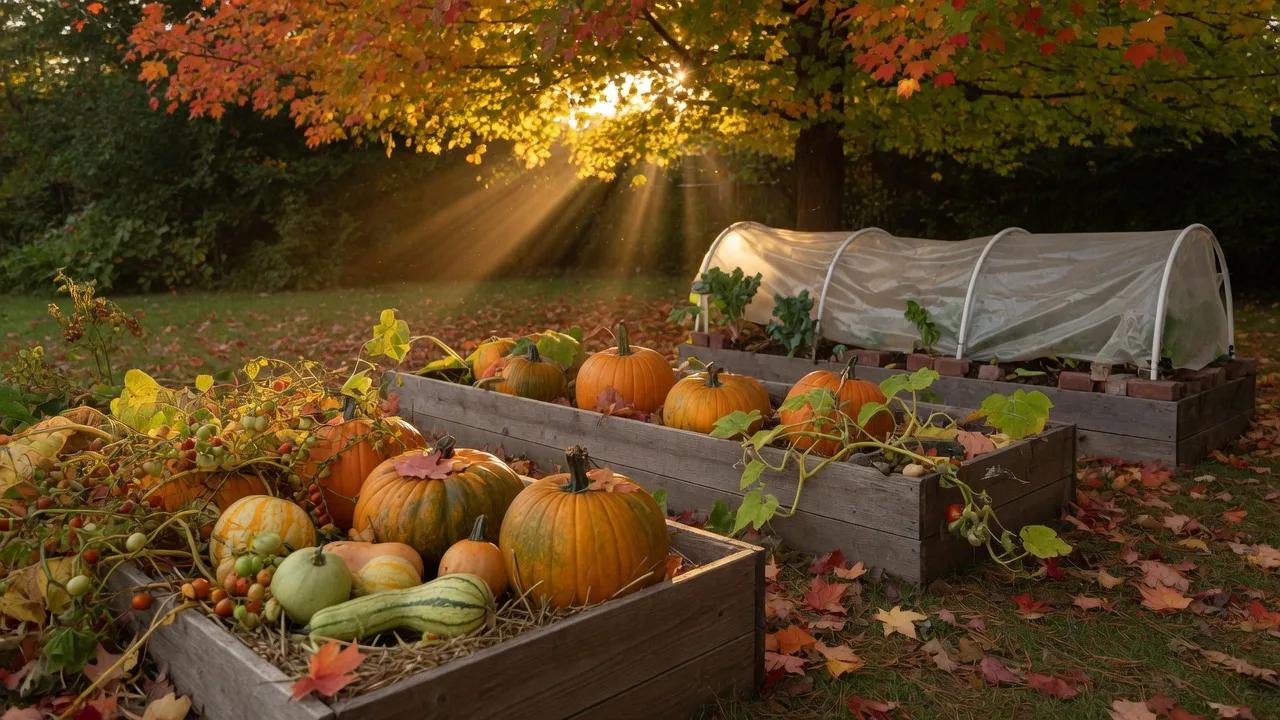
Hoop houses, also called low tunnels, are a step up in scale. They consist of PVC or metal hoops arched over a garden bed and covered with greenhouse-grade plastic. The hoops create a small enclosed environment that stays significantly warmer than the outside air. In Mid-Michigan, a well-built hoop house can keep hardy greens and root vegetables growing through December. Some gardeners in southern Livingston County and Oakland County have successfully overwintered spinach and mache under heavy row covers inside hoop houses.
A practical tip for both cold frames and hoop houses: ventilate them on sunny days. Even on cold afternoons, the interior temperature can climb well above 80 degrees, which can damage or kill cool-season crops. Automatic vent openers are available at greenhouse supply stores, or you can simply prop the lid or plastic open on warm days.
Mulching for Winter Protection
For gardeners who prefer a simpler approach, heavy mulching is an effective way to extend the harvest of root vegetables and overwinter certain crops. After the first hard frost, cover your carrot and parsnip beds with 12 to 18 inches of straw or shredded leaves. Mark the rows with tall stakes so you can find them under the snow. The straw insulates the soil, preventing it from freezing solid, and you can dig vegetables as needed through the early winter months.
The same technique works for kale and Brussels sprouts. A deep straw mulch around the base of the plants keeps the roots alive longer, and the stalks will continue producing new leaves during warm spells. Many Michigan gardeners report harvesting kale on Thanksgiving Day from a mulched bed.
Putting the Garden to Bed for Winter
When the season finally winds down, take time to prepare your garden beds for spring. Remove spent plants to reduce disease pressure. Add a layer of compost or well-rotted manure and cover the beds with a thick mulch of shredded leaves or straw. This organic matter breaks down over winter, feeding the soil biology and giving you a head start on next year's garden.
Fall garden preparation also protects your long-term investment in your property. A well-maintained garden and landscape are among the features that buyers and appraisers notice when evaluating a home. Whether you are planning to sell in the coming year or simply want to enjoy the best produce your Mid-Michigan yard can offer, extending the growing season is one of the most rewarding projects a homeowner can undertake. I have seen many beautifully maintained gardens become the deciding factor for buyers choosing between two otherwise similar homes. If you are thinking about selling and want to know which property features make the biggest difference in today's market, I am always glad to offer a local perspective.

Joyce England, REALTOR\u00ae
Keller Williams First · Mid-Michigan
Joyce England is a Mid-Michigan REALTOR with more than 20 years of real estate, marketing, and client service experience. She helps homeowners buy and sell with confidence across Genesee, Oakland, Livingston, Lapeer, Shiawassee, Saginaw, and Tuscola counties.